



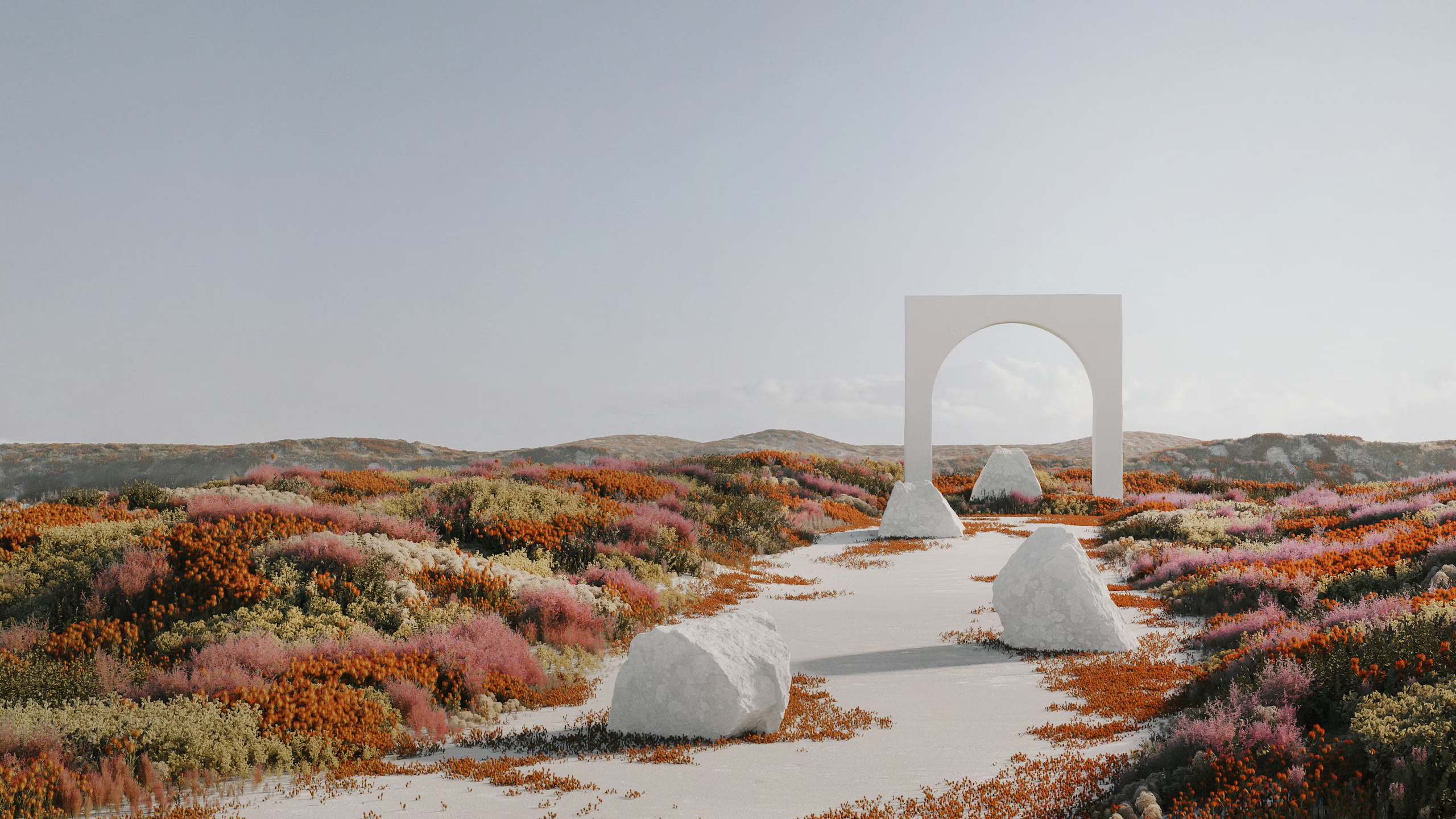
There is a common misconception in the relationship between architecture and nature: the idea that they are always in dialogue. In reality, the dialogue with nature is complex and never immediate. It must be sought, studied, but above all felt. The moment we build, we inevitably alter an existing balance. It is a decisive, irreversible act: a transformation of the place. And only from this transformation can a dialogue emerge.
Sometimes these two processes happen simultaneously. It occurs when an intervention does not merely insert itself, but activates a new relationship with the context, as if it had always been there, waiting to be unlocked. Most of the time, however, it is the place that sets the rules. There is always a genius loci, a presence that guides every choice and that asks to be recognized even before being interpreted.
But what is the genius loci, really?
It is not a datum. It is not a rule. It is a condition. It is the shape of the land, the way light enters in one way and not another; it is the material that belongs to that place stone, clay, wood carrying with it a memory. It is the vegetation, whether spontaneous or cultivated, that defines solids and voids. It is the climate, but also the winds, the humidity, and even the traces: walls, layers, imperfections that tell what has been. But above all, genius loci is that precise, hard-to-name feeling you experience when being there. And it is from this that architecture truly capable of belonging to a place is born.
Interior and Exterior
The relationship between interior and exterior is not a compositional theme. It is a way of living.
In regions like Tuscany, the landscape is not a backdrop to be contemplated, but a presence to be inhabited. Hills, sunsets, olive groves, seasons: everything contributes to defining domestic space.
For this reason, the project cannot stop at the perimeter of the house. Porticos, loggias, verandas, or outdoor lounge areas are spaces that extend living and make continuous what would otherwise be separate. Likewise, openings such as glass walls and windows are not only meant to let light in, but to build a precise relationship with what lies outside. Because it is not simply about “opening,” but about choosing how to look.
In fact, the view “from inside toward the outside” is never the same as when we look at the outside from outside. Architecture can construct this difference: it can select, frame, and relate. A bench beneath a window, an opening aligned with the horizon, a grassy plane reaching eye level these are design gestures that transform the landscape into a daily experience. Interior layout follows the same logic. The most lived-in spaces seek light, while more intimate areas protect themselves, balancing exposure and privacy.
When this happens, the boundary between inside and outside dissolves. And the house ceases to be an object independent from the landscape.
Time as a Measure
One thing must be said: architecture that dialogues with nature is architecture that knows how to age. But aging well is not an aesthetic matter. It depends on how it was designed.
The simpler a project is, the more likely it is to endure. Because simple does not mean poor it means respectful and essential: removing what is unnecessary to leave space for what can last.
Unfortunately, this is not always the case.
There is an architecture that wants only to be seen. We might call it the architecture of the “starchitects” architecture that often seeks to assert itself, to be recognizable, to leave a strong mark. It carries a precise language, but often independent from the place. It works immediately, it impresses, but for this very reason it risks being tied only to a signature, losing sight of a more valuable dialogue.
On the other side, there is a quieter architecture. One that does not seek to stand out, but to belong. One that works with proportions, materials, and the way it rests on the ground. One that accepts not being the protagonist. Because, ultimately, architecture is made for the landscape, for people, for the community not for itself.
The difference becomes visible over time.
More measured architectures change together with the place and age better with it. Materials transform, acquire marks, but do not become inconsistent; light continues to work, openings remain appropriate, and the relationship with the outside does not break.
It is this coherence that allows architecture to endure. In the end, a project lasts over time when it does not try to impose itself, but succeeds in being part of what surrounds it.
Towards Sustainability. Yes—but how?
Today, the relationship with sustainability is only partially clear.
Minimum Environmental Criteria have been introduced, providing guidelines on materials and processes but unfortunately, only in public works.
And this is not enough. If they remain confined to the public sector, sustainability becomes a regulatory obligation, not a design culture. These criteria should apply to all interventions. And they should not only be respected, but also verified over time. Because the point is not to declare, but to truly reduce impact.
Of course, there are still concrete obstacles preventing this from becoming a reality. The first is economic. Sustainable solutions often cost more and are not always supported by adequate incentive systems or guarantees. The second is cultural. There is still not enough awareness to make different choices regardless of cost. And to this is added another risk: materials and products that claim to be ecological without truly being 100% so.
Today, sustainability requires shared responsibility from all actors in the construction sector. Clearer regulations. More aware designers. But also more transparent suppliers. And continuous research into innovation. Only by working together can a credible and reliable supply chain be built, transforming architecture into a truly sustainable practice.